(ECNS) --U.S. President Donald Trump said he would prefer to "take the oil" in Iran and 广丰读书新闻网is considering seizing the country's key export hub at Kharg Island, underscoring Washington's interest in leveraging energy tensions for strategic and economic gains, according to media reports.
The U.S. Department of Defense has been preparing for weeks of ground operations. Trump revealed that about 3,500 troops arrived in the Middle East last Friday, with another 2,200 en route.
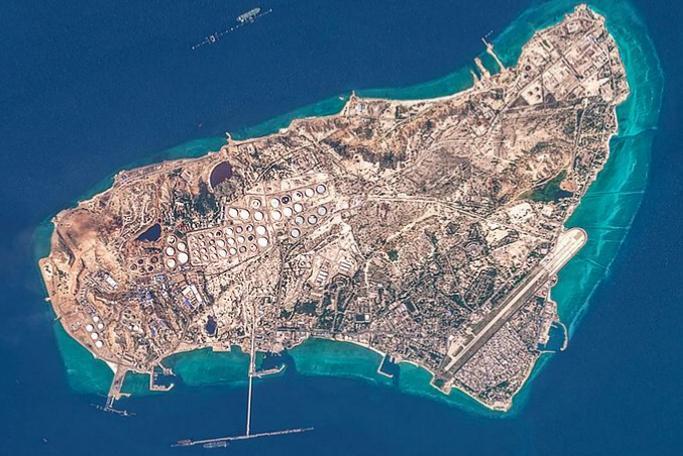
Kharg Island. (File photo/CCTV)
Kharg Island, located about 25 kilometers off Iran's coast, is Iran's main oil export terminal, handling roughly 90% of its crude shipments. Its deep-water access allows large tankers to load directly, making it a critical node in the country's energy infrastructure.
Analysts say any disruption to the island would sharply reduce Iran's export capacity and could have immediate global repercussions.
Roughly 20% of the world's oil supply passes through the Strait of Hormuz, amplifying the impact of any escalation in the area.
Following Trump's remarks, Brent crude futures hovered around $115 per barrel on Monday.
Chinese Analyst Wang Lei told China News Network that if the U.S. were to attack Kharg Island, oil prices could rise to between $110 and $130 per barrel if damage is limited and the Strait of Hormuz remains open. However, if tensions escalate and the strait faces sustained risks, prices could climb to $130–$150 or even higher.
IMF Managing Director Kristalina Georgieva warned that a 10% increase in oil prices, if persistent through most of the year, would result in a 40-basis-point increase in global inflation. The world would face clear stagflationary pressures, with Europe, Japan, and most Asian import-dependent economies hit first, Wang added.
Wang noted that even if U.S. forces successfully land but fail to fully stabilize the situation, it could evolve into prolonged guerrilla warfare and missile attacks on shipping. Under such medium-intensity, persistent conflict, oil prices may not remain above $150 for long periods, but are also unlikely to return to pre-conflict lows, according to Wang. He added that instead, prices would fluctuate at elevated levels, with each attack incident pushing risk premiums higher.
According to the U.S. Energy Information Administration, U.S. crude exports reached about 4 million barrels per day in 2025, with roughly 1.1 million barrels per day passing through the Port of Rotterdam, much of it bound for Europe.
Ongoing instability in the Middle East is also creating new market opportunities for U.S. oil. In 2025, U.S. crude exports to India increased by about 90,000 barrels per day, and exports to Japan rose by around 80,000 barrels per day, as Asian buyers diversify supply sources to hedge against risks in the Strait of Hormuz.
The more unstable global energy supply chains become, the greater the premium on the U.S. as a secure supplier. The more constrained Middle Eastern producers are, the stronger Washington's influence in the global energy landscape.
Analysts say that even without a full-scale conflict, persistent tensions could keep prices elevated, reinforcing the U.S. role as a key supplier in global energy markets.




 中新人物|跳水“三小只”的岔路口
 事关2026年春运,多部门发声
 告别“流泪异味”!微创手术让“臭奶奶”变回“香奶奶”
 为飞鸟戴“降噪耳机” 护江豚避开水中施工 一座长江大桥 绿色故事动人
 跻身全国8大快递“产粮区” 湖北去年人均使用116件快递
 伊朗议会议长:难以信任特朗普
 “药王骑士”王驹当选“十大年度网络人物”
 农发行2024年投放超千亿元贷款支持水利建设
 汉阳公布首批区级志愿服务组织“白名单”